
Inside Decatur Property Tax Records
Several custodians feed one property tax file. The Decatur County Appraiser sets fair market value. It also tracks parcel characteristics and ownership changes, and maintains parcel maps. The Clerk combines those valuations and computes levies. The Clerk prepares the tax rolls and certifies them to the Treasurer. The Treasurer then collects the tax and keeps the payment side.
| Record field | Meaning | Official source |
|---|---|---|
| Land and improvement values | Separate components of appraised value | Appraiser |
| Total appraised value | Estimated value before the class percentage | Appraiser |
| Assessed value | Appraised value multiplied by the statutory ratio | Appraiser and certified roll |
| Exemption or relief flag | Whether qualifying relief is recorded | Appraiser |
| Tax roll and levy | Certified taxable base and rates | County Clerk |
| Bill, payments, and delinquency | Amounts charged, paid, or still due | Treasurer |
A deed price records what a buyer paid. It is not the appraised value, the assessed value, or the tax bill amount on any Decatur County parcel.
Decatur Assessment Percentages
The Decatur County Appraiser publishes the Kansas classification percentages. Those percentages turn appraised value into assessed value. Residential real property is assessed at 11.5 percent. Vacant lots and qualifying nonprofit property carry 12 percent. Commercial and industrial real property, along with improvements on agricultural land, use 25 percent. Public utility real property sits at 33 percent. Other urban and rural real property uses 30 percent. Agricultural land follows a separate formula. Confirm the property class and tax year before applying any ratio to a parcel. The state's official calendar shows where each value sits in the yearly assessment cycle. View the Kansas property tax calendar.
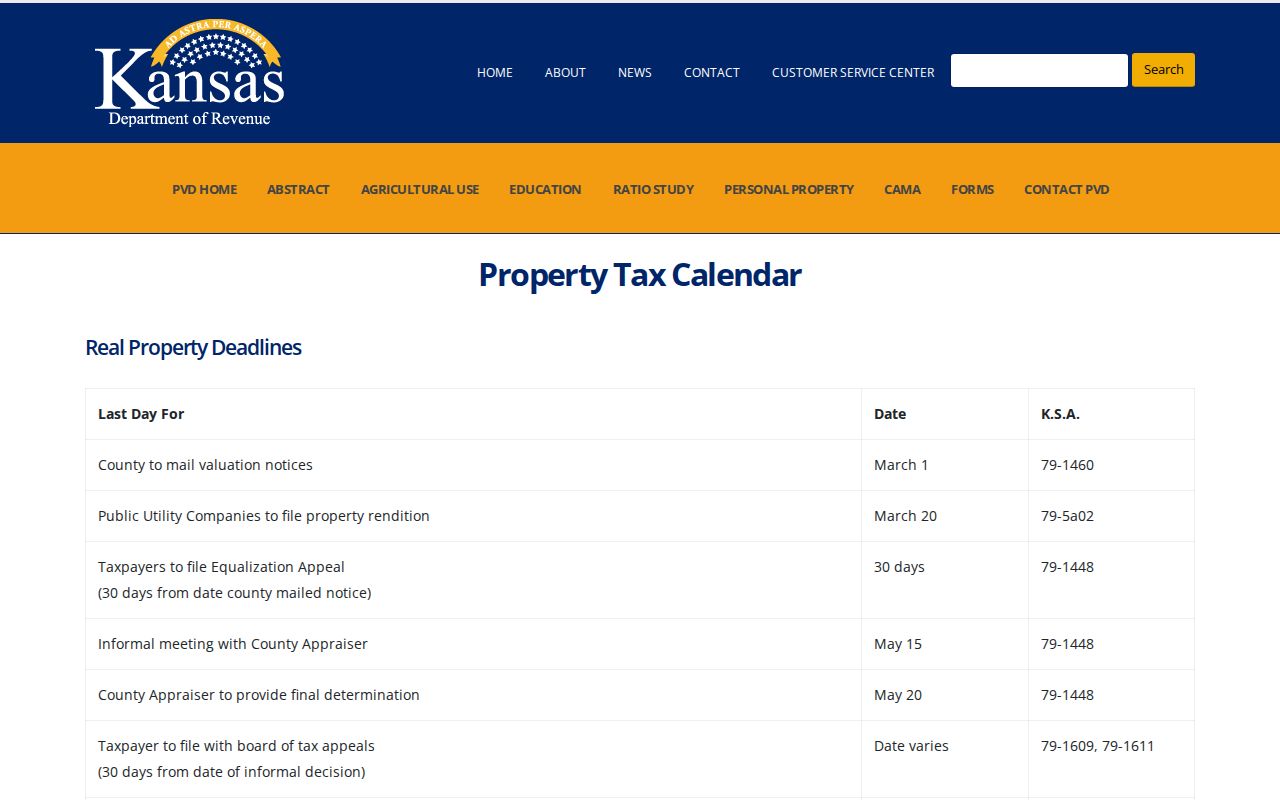
The state calendar is context. The Decatur notice sets the actual year and deadline for each parcel.
Find a Decatur Tax Bill
Decatur County publishes no online parcel-tax search with public field labels. The state payment service accepts payments, but it requires a county statement. It is built for paying, not for a free tax-roll search.
- Ask the Appraiser for parcel number, class, value year, appraised value, assessed value, and relief flags.
- Ask the Clerk for an existing certified tax-roll or levy extract when roll detail is needed.
- Ask the Treasurer for the statement, payments, delinquency, special assessments, and tax-sale status.
- Use the Kansas property tax service only with the county statement.
- Assessed value
- Appraised value after the statutory class percentage.
- Mill levy
- A tax rate expressed in mills and applied to assessed value.
- Tax relief
- A program or exemption governed by its own eligibility rules.
- Tax lien
- A claim tied to unpaid tax; verify its current status and release.
Separate Decatur Tax Values
Market value is just the Appraiser's estimate. Appraised value feeds the assessment process. Assessed value equals appraised value times the class ratio. The bill then layers on certified levies and other lawful charges, and even a recorded deed price stays separate from every step. The Appraiser weighs sales comparison, cost, and income approaches, so one deed price is evidence but never the final assessment. When a figure looks wrong, first check class, acreage, building facts, value components, and property identity.
Decatur Exemptions and Relief
The Appraiser tracks eligibility for exemptions and property-tax relief. Decatur County publishes no single local results screen. Start with Kansas exemption guidance, then confirm the current form, proof requirements, deadline, and filing office with the county. The County Clerk page also links Homestead claim material. Homestead relief and exemption routes are not interchangeable, and neither an owner name nor a mailing address proves eligibility or occupancy.
Contest a Decatur Assessment
Kansas mails valuation notices on or before March 1. From the mailing date, an owner usually has 30 days to open an equalization appeal. State guidance sets an informal meeting target of May 15. Final determination lands around May 20. A Board of Tax Appeals window generally follows within 30 days of the informal decision. Other routes carry their own milestones. Start with the Decatur Appraiser. Keep the notice, parcel number, valuation year, legal description, value challenged, evidence, and filing proof. Comparable sales, corrected characteristics, photos, or appraisal material should match the stated issue.
Protect the appeal window. File within the deadline printed on the current Decatur County notice. Verify the year-specific date before relying on the general state calendar.
Verify Decatur Tax Status
The Treasurer collects property tax. Call 785-475-8103 or email decaturtreasurer@dccoks.org at 120 E Hall Street, PO Box 167, Oberlin. Name the tax year first. Then request installment status, payment dates, unpaid balance, special assessments, interest or fees, and any sale or redemption status. The official Decatur County Treasurer page links state services.
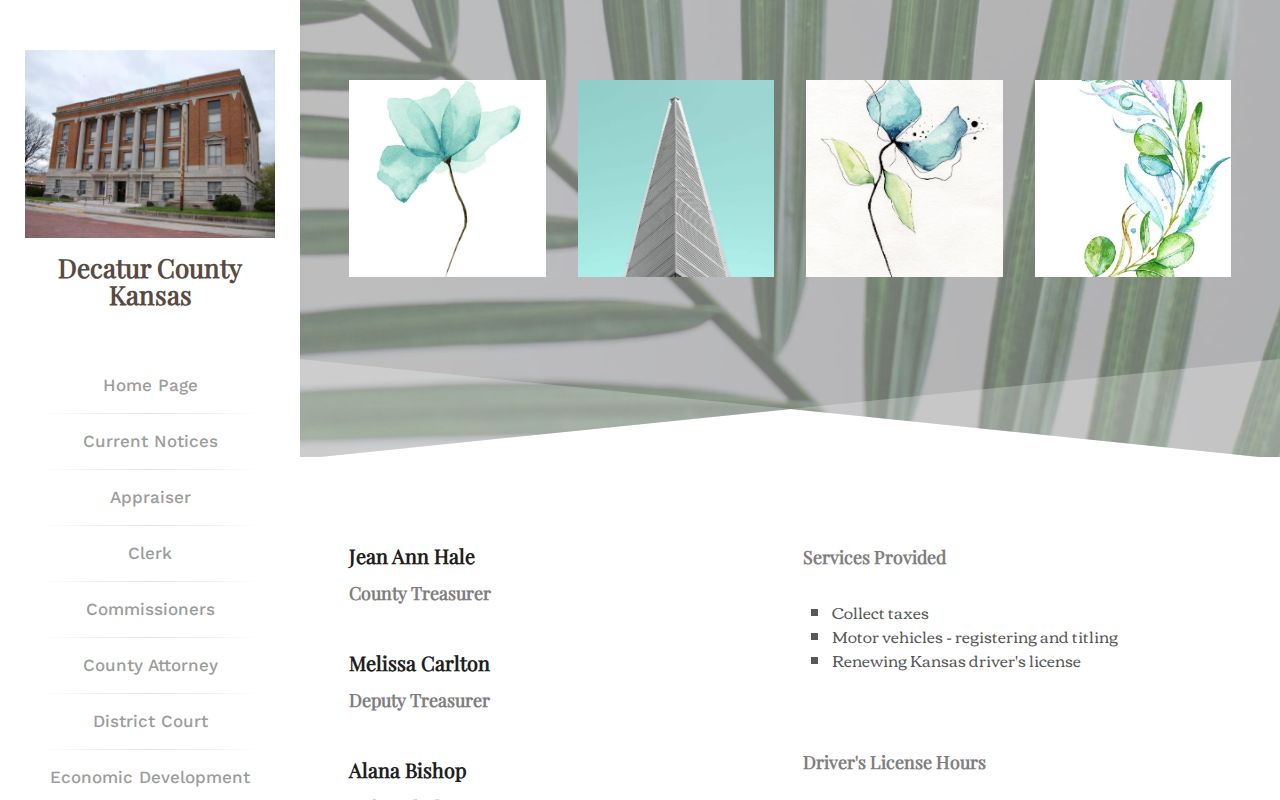
The page supplies contacts, not a public parcel-level bill result.
Read Decatur Value Components
A thorough assessment request should break out land value, improvement value, total appraised value, assessed value, classification, percentage, and any exemption or relief flag. Include the valuation year too. The official Appraiser page lists ownership, maps, and property-characteristic duties, though it does not prove that every field appears on a public card. Ask whether the office also keeps acreage, dimensions, building use, year built, last sale, and value history.
Land and improvements rarely move in lockstep. A shift can come from updated characteristics, a new structure, demolition, a class correction, market analysis, or another assessment action. Do not infer the cause from the total alone. Request the record that explains the change. A city permit may document physical work, but the Appraiser's record still controls the assessment field.
Preserve the valuation date and source every time. A current tax payment screen, an older certified roll, and a newly mailed Notice of Value can each be accurate for different stages of the cycle.
Follow the Decatur Tax Cycle
The state tax calendar sets the rhythm for the whole year. Valuation notices come first, and owners get a window to appeal before the informal review stage ends. After that, the appraiser certifies values. The county clerk prepares the abstract. The certified figures move downstream. Those statewide milestones matter. They explain why one Decatur County record can look newer than another covering the same parcel.
From there, the Clerk combines valuations and computes levies. The Clerk builds the levy sheets and tax rolls, then certifies the roll to the Treasurer. The Treasurer then collects whatever the certified record charges. Remember that a payment entry cannot fix the Appraiser's building data. The recorder cannot settle a tax-bill question. Route each problem to the office that maintains those records.
A mid-cycle sale adds another wrinkle. Keep the deed recording date and the assessment year separate in your notes. Do the same for the certification date and the statement year. Decatur County publishes no fixed schedule for refreshing ownership changes. Treat the roll as something that updates on its own rhythm rather than overnight.
Check Decatur Tax-Sale Records
Start a delinquency question with the full picture. Include the parcel or account number, the tax year, the statement, payment history, interest or fees, special assessments, and current collection status. Ask directly whether a sale notice, redemption period, court proceeding, or resulting deed exists. Decatur County publishes no public delinquency list and no parcel-level tax-sale portal, so the answers come from the offices themselves.
A tax-sale notice is not a completed transfer. When litigation or a court order is involved, search the District Court records first. Then ask the Register of Deeds for any instrument the sale produced. Match the legal description at every step. A name in a notice could belong to an owner, a lienholder, a taxing body, or another party entirely.
Pay only through the official Treasurer or state service. Never respond to an unsolicited message demanding funds. Confirm the parcel and tax year against the published county number before sending money. The Kansas payment page accepts card or e-check, but it requires a statement in hand, and a clean screen there does not prove the parcel's full tax history.
Request Decatur Tax Records
Direct each request to the custodian who actually holds the record. Identify the parcel or account, the legal description, the tax year, and the record type. Say whether you want inspection, paper, or an electronic copy. State your preferred delivery route too. Ask for a cost estimate before staff time, copying, or mailing charges pile up.
The Kansas Open Records Act sets the pace. The custodian must act by the end of the third business day. That deadline covers production, denial, or an explanation of the timing. It is not a promise to finish the job in three days. If anything gets redacted, ask for the legal basis and the releasable portion.
Push for clarity when the answer is thin. Ask the office to state outright that no responsive record exists. Ask, too, whether another custodian holds it. Keep the response date, the cost estimate, the production date, and any exemption explanation. Those details reveal whether a gap reflects access, timing, or a missing record. The gap may simply be a record the office does not maintain. For what the value figures mean, see Decatur County property values. This page stays with assessment, bills, payment, exemptions, and appeals.
Note: Confirm the same parcel and tax year across every request, and do it before comparing records from different offices.